Hummel Trainers Guide: Handball Perfekt, Slimmer Stadil, Monaco 86 and More
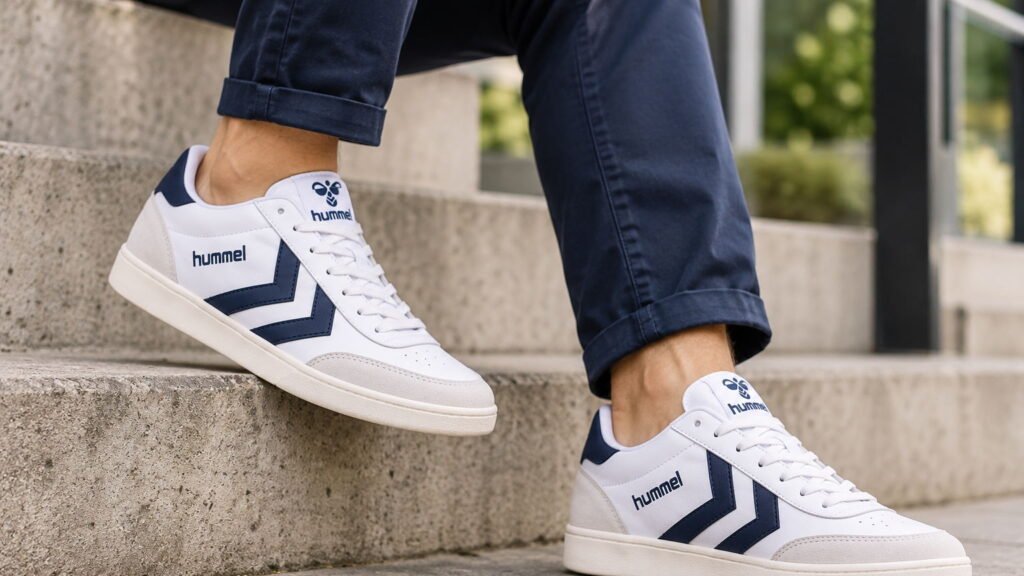
Hummel is the trainer brand people tend to discover by accident, usually after wondering what that little bumblebee logo is. It is also one of the best-value places to find retro-style trainers: clean, minimal, mostly white, and often priced well below the bigger sports brands. Here is a quick guide to the Hummel styles worth knowing, who they suit and what to pay.
A quick bit of Hummel history
Hummel was founded in Hamburg, Germany in 1923 by Max Messmer and his father Michael, who launched a football boot under the Hummel name. “Hummel” is German for bumblebee, which is why the brand uses a bee as its symbol. The two V-shaped chevrons that you see on almost every Hummel product appeared in 1964, and in 1984 the brand became Danish-owned. That mix of football heritage and Scandinavian simplicity is exactly why the trainers look the way they do.
The Hummel trainers to know
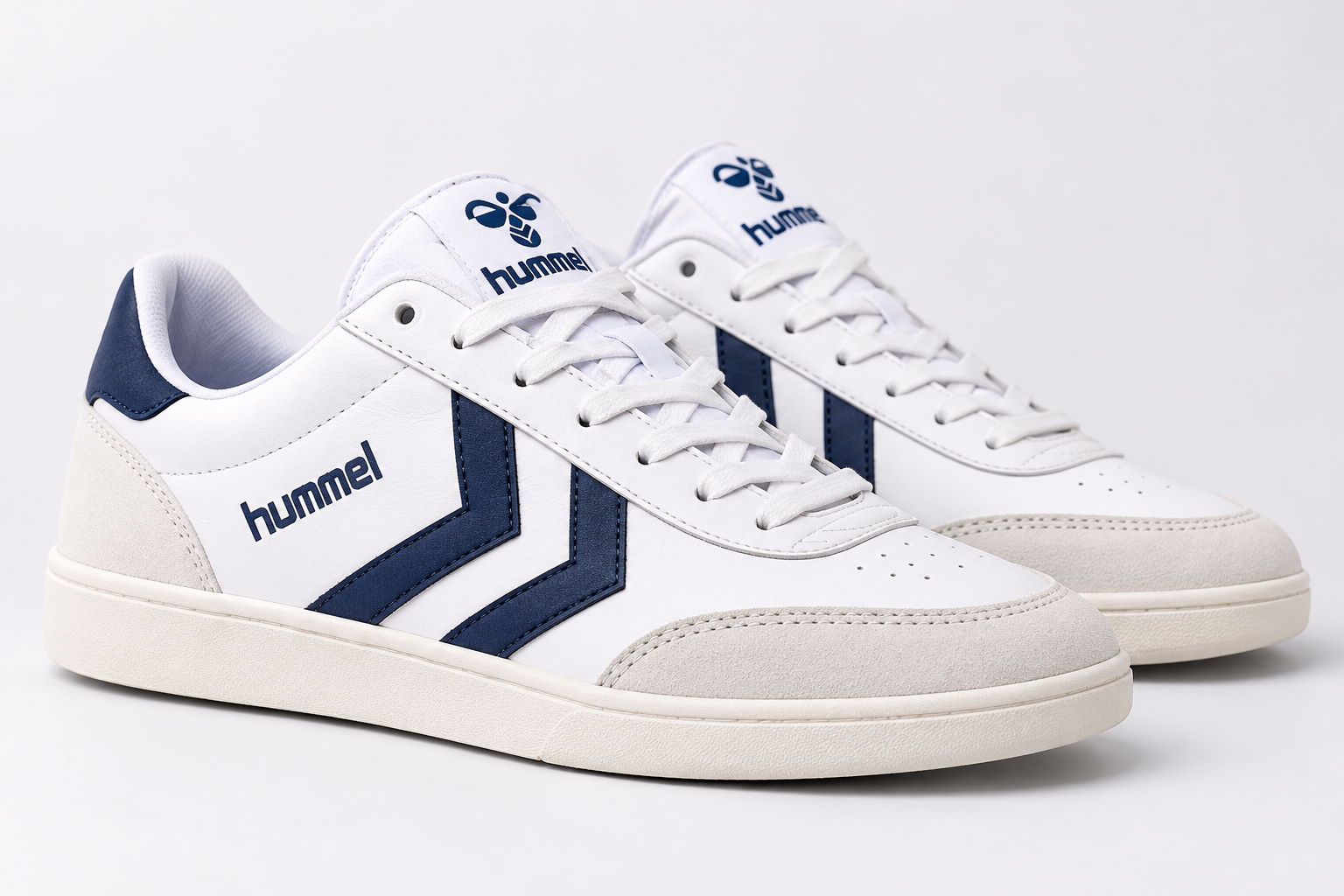
Handball Perfekt
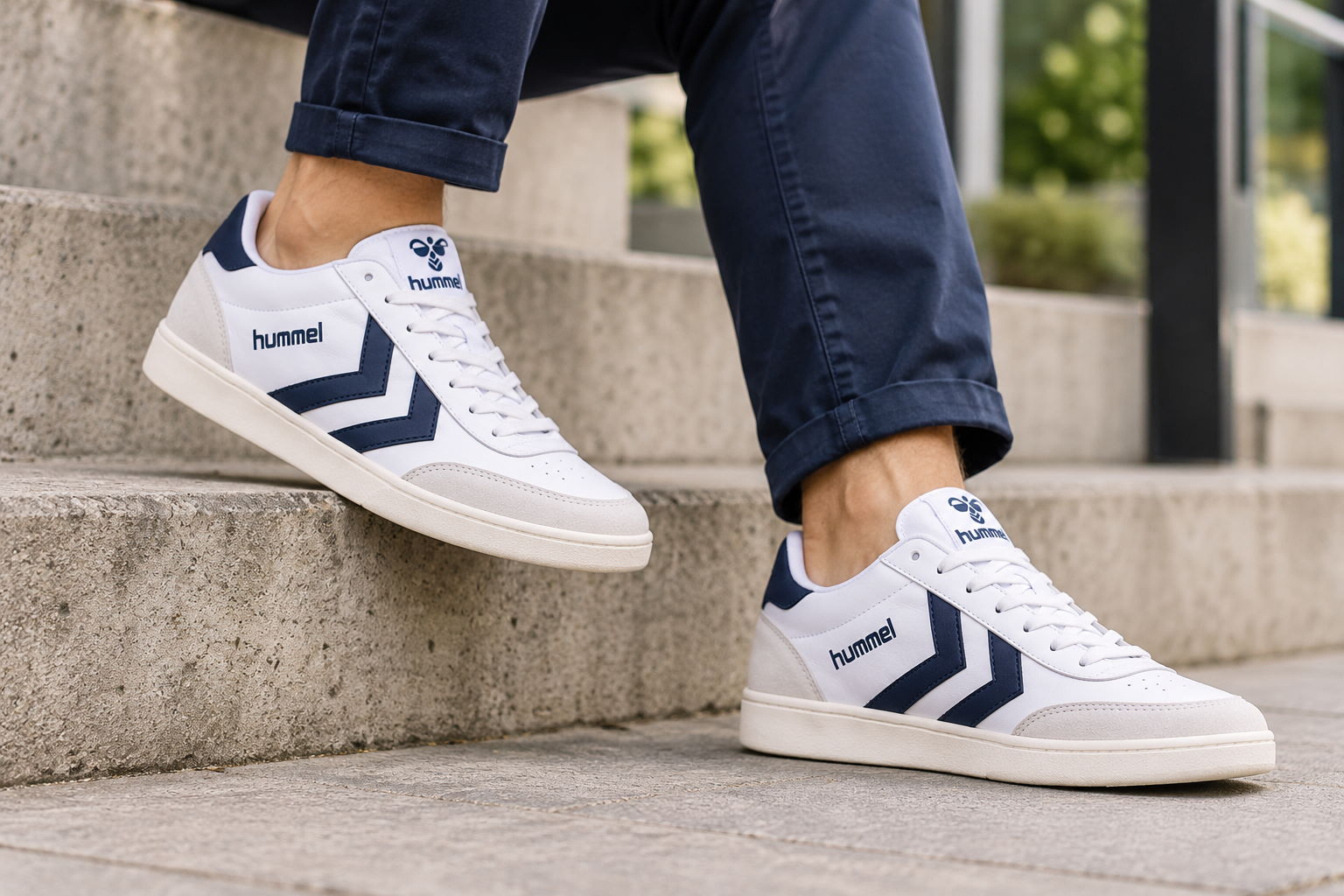
This is the one you will see the most. It is a slim, low-profile court-style trainer in smooth, mostly white colourways. It looks smart enough to wear with chinos and casual enough for jeans, and it is also one of the cheapest ways to get that crisp white-trainer look.
Slimmer Stadil (Low, High and Tonal)
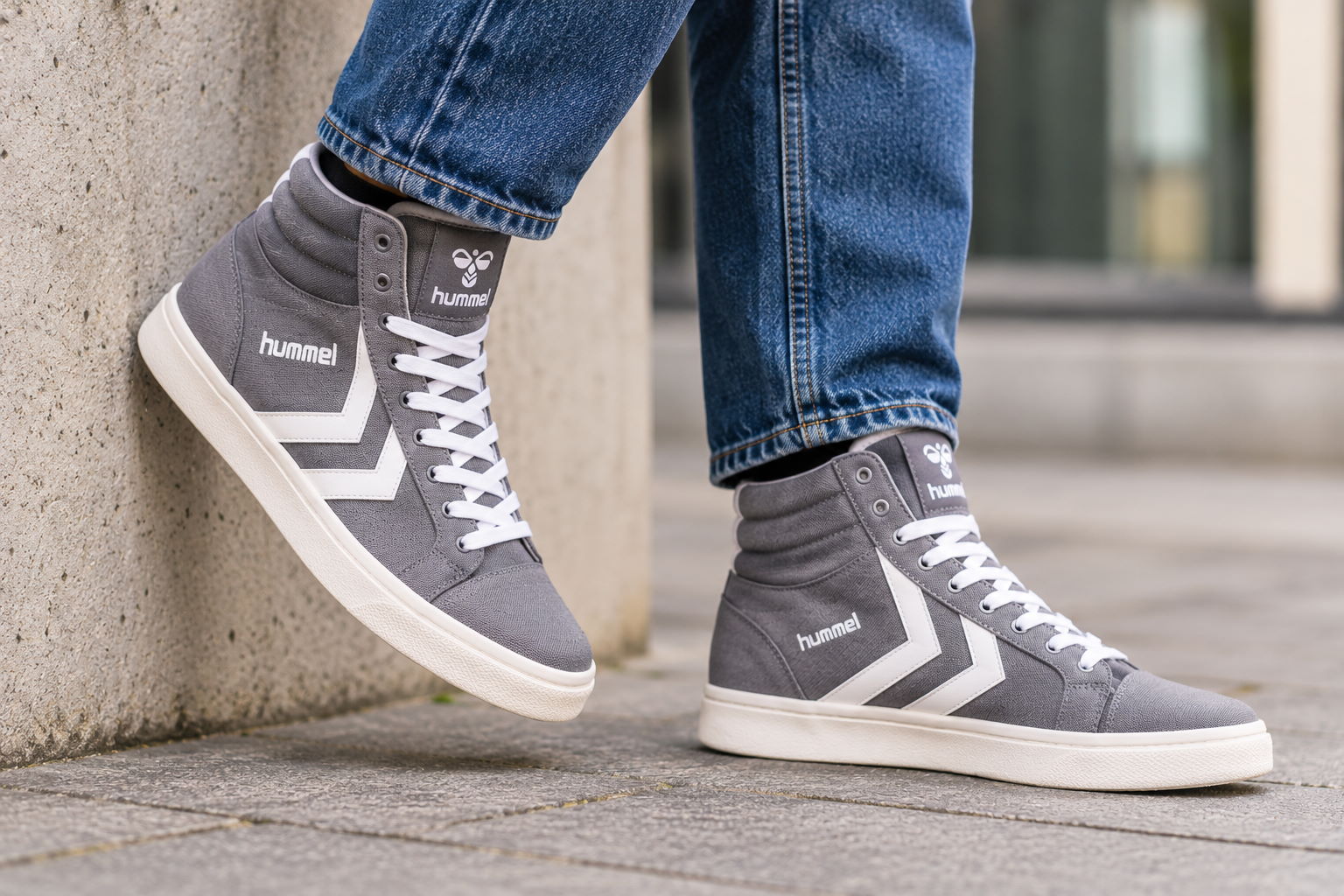
The Slimmer Stadil comes as a low-top and a high-top, and in tonal colourways where the whole shoe is one shade. The high-top gives you a retro high-top look without looking like sportswear, and the low is the more versatile of the two. If you want something that stands out from the usual white court shoe, this is a good pick.
Monaco 86
A retro sports-style trainer with a clean look. It suits people who like the feel of an old-school trainer but do not want anything chunky.
Ten Star
If you like the canvas high-top idea (think Converse), Hummel’s Ten Star is the alternative. It comes in low and high versions and in canvas and tonal finishes. It is a good choice when you want a high-top that nobody else has.
Court Line, Super Match and St. Power Play
These are the more traditional, tennis- and court-inspired shapes in the range, mostly in white, mostly with the chevron detail. The Court Line is the most budget-friendly of the group, while the Super Match and St. Power Play tend to sit a little higher and look a little more premium.
How do Hummel trainers fit?
Hummel fit differs a little between models, so check the retailer’s size guide and read a few reviews on the exact shoe. As a general rule, slim, court-style trainers like the Handball Perfekt are less roomy than a chunky running shoe, so if you are between sizes or have wider feet, consider going up half a size if the retailer offers it. Our product pages list the sizes currently in stock so you can see what is actually available.
How much do Hummel trainers cost in the UK?
At the time of writing, most Hummel trainers we list sit somewhere between about £35 and £60, with official prices mostly in the £42–£75 range. That makes them noticeably cheaper than the equivalent white leather trainer from a bigger name. Because many are on offer, it is worth comparing before you buy, and our listings show the current price against the usual price so you can spot a good deal.
How to wear them
- Smart-casual: white Handball Perfekt or Court Line with navy chinos and a plain tee or knit.
- Relaxed: Slimmer Stadil High with straight jeans, with the hems left slightly short so the shoe shows.
- Sporty: Monaco 86 with track pants and a simple sweatshirt.
What to look for: the bee and the chevrons
Hummel is easy to spot once you know what to look for. The two V-shaped chevrons, which date back to 1964 and which the brand says stand for team spirit and drive, appear on the side of most of its trainers. The bumblebee, the brand’s symbol, also shows up in its logo. Because the branding is quiet rather than loud, Hummel suits people who want a trainer with a bit of personality but no shouting.
Which Hummel should you buy first?
- You want one smart white trainer: Handball Perfekt or Court Line.
- You want something with a bit more attitude: Slimmer Stadil High, particularly in a tonal colour.
- You prefer a canvas, summery look: Ten Star Low Canvas.
- You like sporty and retro: Monaco 86.
- You want to spend the least: Court Line, which is regularly one of the cheapest in the range.
If you like Hummel, you might also like…
Hummel’s clean white court trainers sit in the same space as the Puma Caven III and Club LT, the Adidas Grand Court and the Superga 2750. If a Hummel is not quite right, have a look at our Puma, Adidas and Superga ranges. The prices are close, and comparing across brands often turns up a better deal.
Keeping white trainers white
A white trainer only looks good if it is clean, and mostly white ranges like Hummel’s reward a bit of care.
- Wipe regularly. A damp cloth after wearing stops marks from setting. Smooth uppers wipe clean easily.
- Spot-clean, do not machine-wash. Use a soft brush, a drop of mild soap and lukewarm water.
- Wash the laces separately. Fresh laces can make an old pair look new.
- Dry naturally. Stuff with paper and keep away from radiators, which can warp or yellow the sole.
The Hummel story in one minute
Hummel began in Hamburg in 1923 as a football-boot maker. The brand moved to Danish ownership in 1984, and today it is closely associated with Scandinavian sport and team kit as well as footwear. That sporting background is why its trainers look the way they do: practical, low-profile and designed to be worn rather than displayed.
Frequently asked questions
Are Hummel trainers any good?
For everyday wear, yes. They are simple, lightweight and well priced. They are fashion-leaning trainers rather than serious running shoes, so pick a running brand if you plan to train in them.
Who owns Hummel?
Hummel started in Germany and has been Danish-owned since 1984.
Why do Hummel trainers have a bee on them?
“Hummel” is German for bumblebee, and the bee is the brand’s symbol.
Disclosure: TrainerSpotter may earn a commission if you buy through links on this page, at no extra cost to you.
Sources: Hummel: The History of hummel.